




How URL Changes Impact Google Ranking | SEO Guide
Introduction
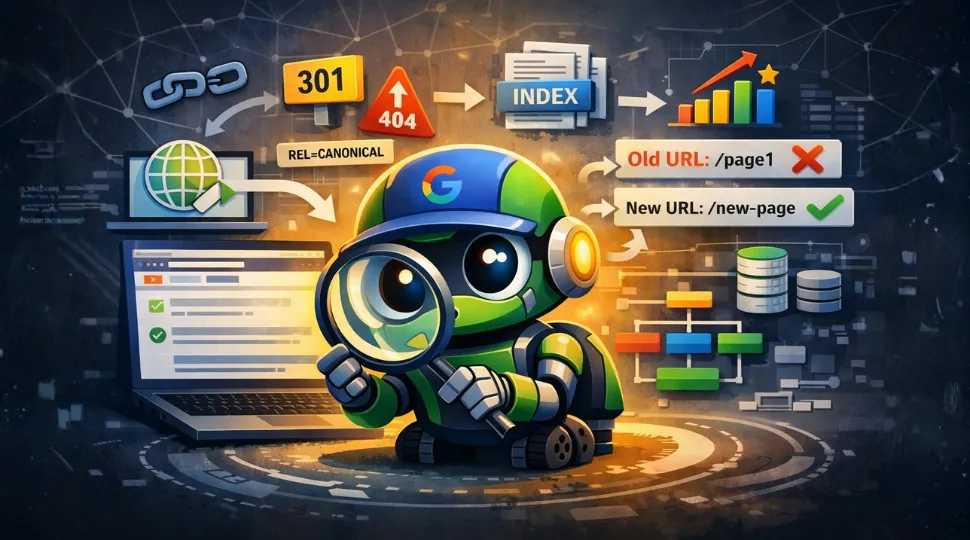
Google ranking is much more than keywords and backlinks. The interpretation of the URL changes in a site by Google is one of the most neglected and powerful factors influencing rankings.
Most of the issues of SEO do not occur due to significant errors. They occur due to the fact that minor technical components, such as the URLs, redirects, the canonicals, and internal links, are overlooked over too long. In the long run, these unspoken issues undermine the trust signs and mislead search engine.
In case you wish to grow your SEO sustainably, you should know how Google in fact processes the alteration of URLs and how these alterations affect crawling, indexing, and rankings.
To gain a more insight into the concepts addressed in Content Creation Is Not About Virality, It's About Value, you can improve your skills by taking a practical digital marketing course in pune that you can apply in real-life application.
What Google Ranking Really Depends On
Google ranking is created on trust and consistency. The algorithm of Google takes into consideration thousands of signals, yet they are all oriented on a single question:
Is it possible to trust this page to be of better service to the users than others?
Some of the best ranking indicators comprise:
- Clean and consistent URLs
- Proper technical SEO setup
- Accurate canonicalization
- Good internal and external interconnections.
- On-page and off-page search engine optimization.
Even excellent content finds it difficult to rank, even in the presence of misaligned URL signals.
How Google Understands URLs
URLs as Unique Identifiers
Every URL is considered as a distinct one to Google. Even minor changes form various URLs:
- http vs https
- www vs non-www
- trailing slash vs no slash
- uppercase vs lowercase
All variations have the potential of dividing ranking signals when not managed properly.
Why This Matters for SEO
When Google is faced with several URLs of the same URL it has to make a choice:
- Which version to crawl
- Which version to index
- Which version to rank
Unwise choices in this can make it less visible.
Why URL Changes Affect SEO Performance
The alteration in URL has a direct effect on the ranking of Google since it affects the flow of signals within a Google site.
When URLs change:
- The backlinks that are present might lose their worth.
- Inter-connection can be broken or weakened.
- Conflicts of canonical signals are possible.
- Crawl budget can be wasted
These signals--and errors slack everything--must be reprocessed by Google.
Crawling vs Indexing: What Changes First
Crawling Explained
Crawling happens when Googlebot can find URLs by:
- Internal links
- External links
- Sitemaps
- Redirects
An alternate URL does not necessarily result in crawling when links are not changed.
Indexing Explained
The process by which Google inserts a URL in its database and determines its appropriateness is referred to as indexing.
Surgery occurs when a URL is crawled but never indexed because:
- Canonicals point elsewhere
- Content is duplicated
- Technical errors exist
Redirects: Not a Magic Fix
301 Redirects and SEO
A 301 redirect informs Google that there has been a permanent move of a page. Redirection however, is not instant ranking savers.
Common redirect errors are:
- Redirect chains
- Redirect loops
- Redirection to irrelevant pages.
Ranking signals are diluted by each additional step.
What Google Actually Does
On a redirect, Google:
- Crawls the old URL
- Follows the redirect
- Measures signal uniformity.
- Makes a decision on whether to transfer ranking equity.
This process is slowed or blocked through misalignment.
Canonical Tags and Signal Alignment
What Is a Canonical URL?
Google uses a canonical tag to indicate to it that this is the preferred version of a page.
It's essential when:
- Similar content exists
- Parameters generate various URLs.
- Pagination is used
Canonicals vs Redirects
Redirect sends a user and bots into motion.
Canonicals imply preference.
In case of contradicting redirects/internal links in canonicals, Google can completely disregard them.
| Aspect | Canonical Tag | 301 Redirect |
|---|---|---|
| Purpose | Suggests the preferred URL to Google | Permanently sends users and bots to a new URL |
| User Experience | User stays on the same URL | User is automatically redirected |
| Signal Strength | Hint (Google may ignore if signals conflict) | Strong directive (usually followed) |
| Impact on Google Ranking | Consolidates ranking signals when used correctly | Transfers ranking signals from old URL to new URL |
| Best Used When | Duplicate or similar content exists | Page or URL is permanently moved |
| Crawl Budget Impact | Minimal if implemented cleanly | Can increase crawl cost if redirect chains exist |
| Indexing Behavior | Google may index either URL | Old URL eventually removed from index |
| SEO Risk if Misused | Conflicting signals can cause index confusion | Chains and loops can dilute ranking signals |
| Internal Links Should Point To | Canonical (preferred) URL | Final destination URL |
| Common SEO Mistake | Canonical pointing to redirected or blocked URL | Redirecting to irrelevant or non-matching content |
Internal Links and External Links Explained
Role of Internal Links
Internal links guide Google's crawl paths and distribute authority across pages.
Best practices include:
- Linking to final URLs (not redirected ones)
- Using descriptive anchor text
- Maintaining logical site structure
Role of External Links
External links reinforce trust. But if backlinks point to outdated URLs, their value weakens unless redirects are clean.
URL Changes During Website Migrations
The most common causes of ranking drops are the purpose of website migrations.
Common Migration Scenarios
- Domain change
- HTTPS migration
- CMS migration
- URL structure redesign
Why Rankings Drop
Rankings fall when:
- Redirects are incomplete
- Canonicals are wrong
- Internal links are not updated.
- XML sitemaps are outdated
Technical SEO Audits for URL Issues
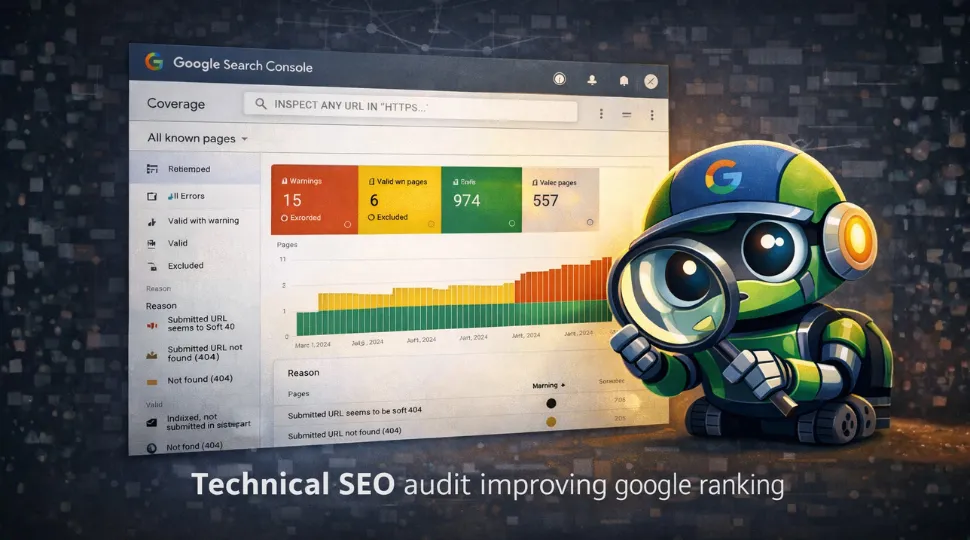
They are conducted in form of regular technical SEO audits which identify problems early on.
What to Check in Audits
- Redirect mappings
- Canonical consistency
- Broken internal links
- Duplicate URLs
- Index coverage reports
The accuracy is enhanced by the use of such tools as Google Search Console and Screaming Frog.
On-Page and Off-Page SEO Impact
On-Page SEO
URL changes affect:
- Keyword relevance
- Page hierarchy
- Internal anchor context
Make sure that URLs are descriptive and consistent with key word research.
Off-Page SEO
Off-page SEO contains backlinks. When URLs are modified without the use of redirects, the link equity is lost.
Real-World SEO Examples
When a brand changed URLs during a mid-size ecommerce migration, the inner links were not changed.
Results within 30 days:
- 40% drop in indexed pages
- Crawl budget waste
- Fall in core key words.
Internal linking messages and canonicals helped to regain rankings in 8 weeks.
Common URL Mistakes That Hurt Google Ranking
Avoid these frequent issues:
- Modifying the URLs without search engine optimization.
- Temporary redirects are used in place of 301.
- Conflicting canonicals
- No attention paid to trailing slash consistency.
- Forgetting sitemap updates
Minor errors multiply with time.
Best Practices to Protect Google Ranking
Follow these proven steps:
- Plan URL changes carefully
- Use clean, readable URLs
- Canonicals, redirects, and internal links.
- Surveillance Search Console on a regular basis.
- Conduct periodic audit of SEO.
The practices defend self-preservation over short term.
Conclusion
The relevance of the interpretation of URLs by Google is important in ensuring that Google retains its ranking in the competitive search market. Such changes of URLs, when managed poorly, silently cause loss of trust and visibility.
Be it that you have been considering a search on digital marketing course in thane or digital marketing classes in pune, researching on affordable digital marketing course in pcmc would make you put good fundamentals together without stretching your pocket.
Learning technical SEO is no longer a nice-to-have skill, it now forms the basis.
"SEO is not about tricking Google. It's about partnering with Google to provide the best search results for users."
— Phil Frost, Digital Marketing Expert
FAQs: URL Changes and SEO
1. Always does a change of URL damage rankings?
Not when it is done properly with the right redirects and signal alignment.
2. What is the processing time of URL modification by Google?
Usually 2-8 weeks, based on crawl rate and Home page size.
3. Are redirects enough for SEO?
No. There should also be internal links, canonicals and sitemaps.
4. How to move to 1 st page when changing URLs?
Make sure that it is technically accurate, well internally linked and that it is relevant to the keywords.